Visit MAMAC and discover on two floors and nearly 2,500 m², a selection of more than 200 works of art from the collection.
Every year MAMAC completely renews the top floor and offers new experiences in its key rooms dedicated to Niki de Saint Phalle, Yves Klein and the international POP.
The collection is on the move for the pleasure of exploration and new dialogues.
Display of collections : Rébecca François, Hélène Guenin, Julia Lamboley, Steve Simon
2022-2023
2021-2022
2021-2022
2020-2022
New Realism – Pop Art
Room 8
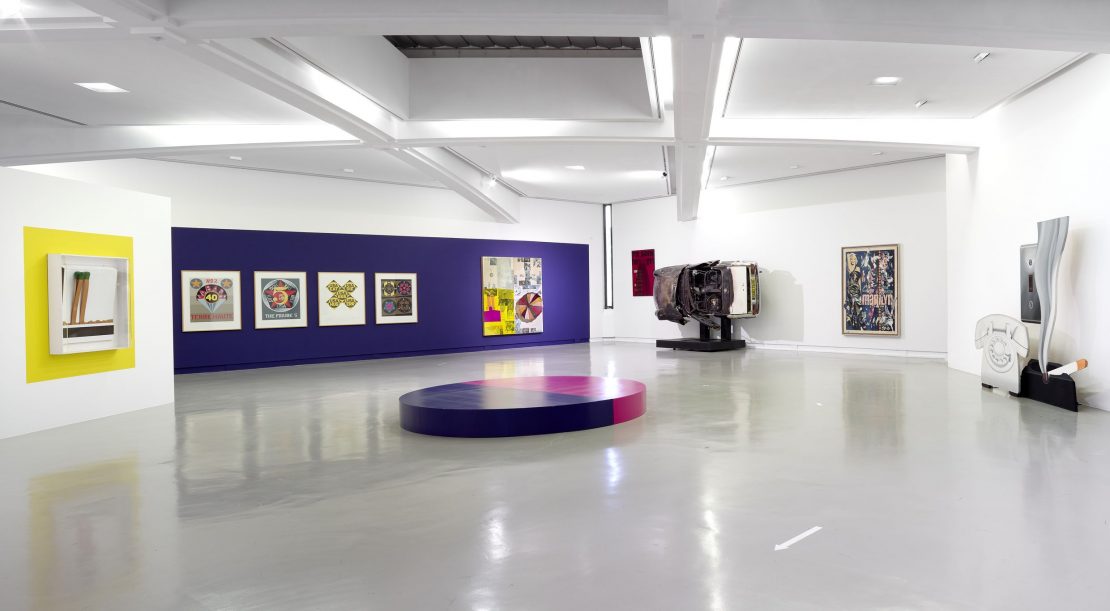
On the occasion of its 30th anniversary, MAMAC is widely deploying in rooms 4 and 8, key pieces of this international movement emblematic of its collections.
The revolution of the 1960s
American Pop Art was born in the wake of a first English Pop which crystallized in London in 1956 during an exhibition that had become emblematic:This is tomorrow, organized at the Whitechapel Gallery.
Though it has no direct link with English Pop Art, American Pop Art refers to a trend born out of individual initiatives. Not a structured movement in the sense of a group which organizes collective events, it certainly has coherence. Essentially derived from the work of Robert Rauschenberg and especially Jasper Johns, it is characterized by an interest in ordinary objects, irony, and a confidence in the visual power of images. The center of American Pop Art is mainly located in New York, where first artists like Claes Oldenburg and Jim Dine, Roy Lichtenstein, Andy Warhol, then James Rosenquist, George Segal, and Tom Wesselmann exhibited.
Pop artists evolve in a post-war world where manufactured products, constant solicitation to surround themselves with desirable objects and aseptized dreams of a modern home prevail. They refer directly the consumer society, appropriating images from advertising, cinema, comics and television, diverting their smooth representations and vibrant colourAt the same time, the daily reality will also inspire European artists.
On the other side of the Atlantic, as a reaction against the prevailing abstraction of the time and about to become academic, Pierre Restany founded New Realism in 1960 with a group of artists friends: Arman, Dufrêne, Hains, Klein, Raysse, Spoerri, Tinguely and Villeglé who were joined in 1961 and 1962 by Niki de Saint Phalle, Rotella, César, Deschamps and Christo.
The movement develops a subversive strategy of appropriation of the urban, technological and industrial world. Like Pop Art artists, they seize the ordinary, the signs and failings of the consumer society. They translate its excesses by quantitative expression techniques or by the use of scrap objects from daily life.

2020-2021
Play on words – Play on writing
Room 9
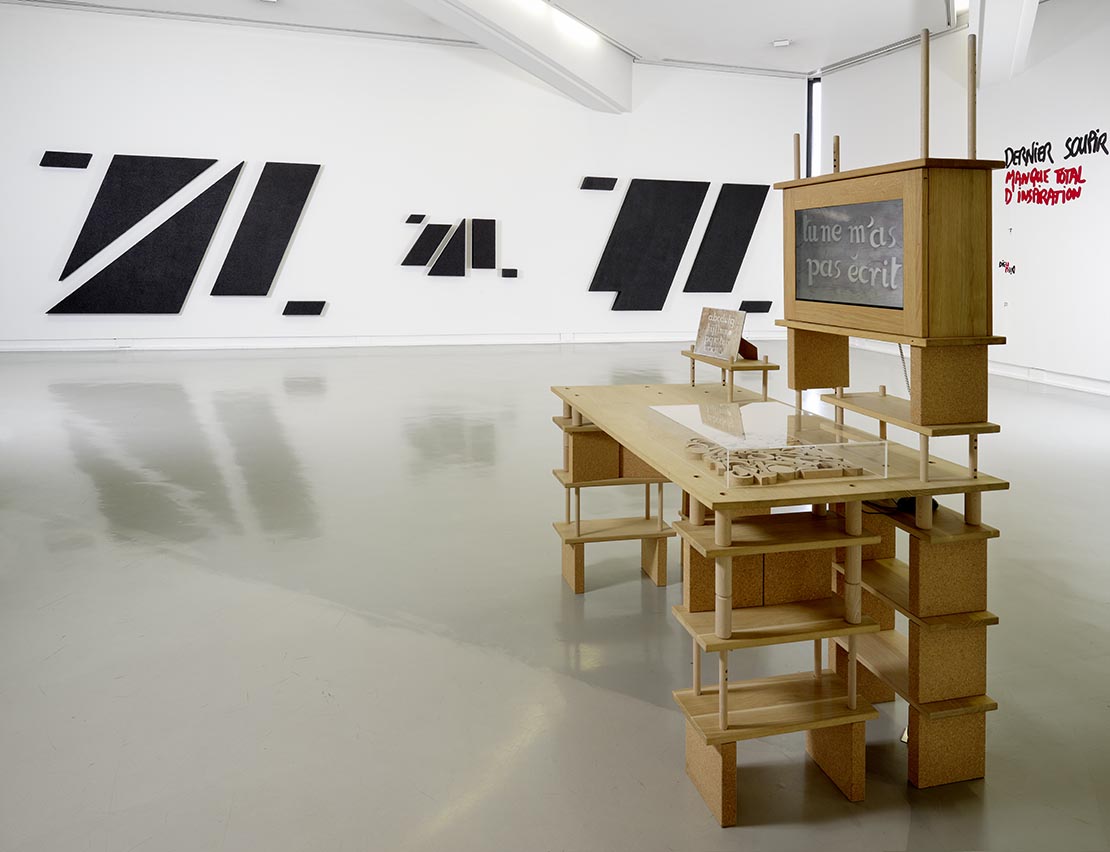
Emblematic work of MAMAC, La Cambra or “Ben’s museum” gives an account of the importance of writing in Ben Vautier’s work, a major artist of the Nice art scene. His supple, loose, almost childlike calligraphy restores the air of freedom and the art of attitude he initiated at the end of the 1950’s.
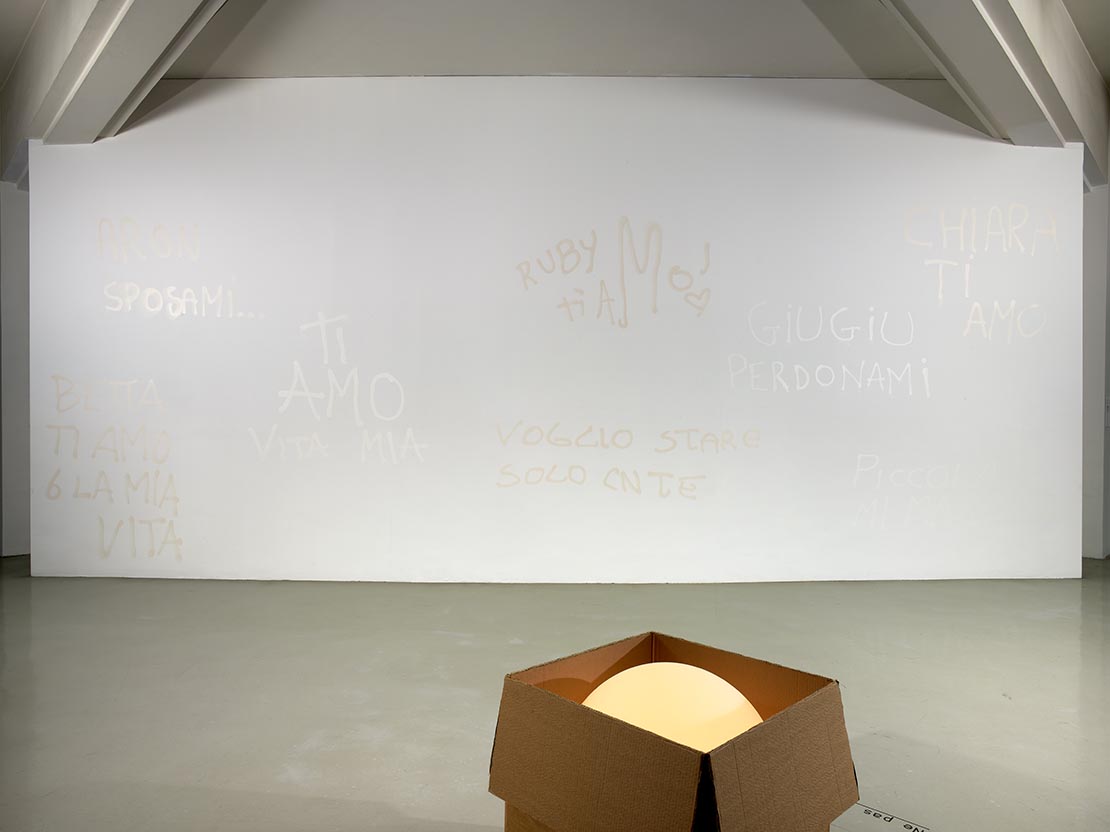
Around this monumental work, puns, writing and language games by different guest artists are deployed. On the walls, paintings or sheets of paper, graphs and alphabets are invented, anagrams, tags and crosswords are drawn. Flourishing in a poetic and playful universe, words reveal their polysemy; their graphics are being formed and unbridled. This exhibition brings together works from the collection as well as loans and interventions by artists of different generations linked to the history of the museum. Several works have been activated through a precise process defined by the artists. The relationship between the wall and writing is highlighted. All of them engage the body of the spectator, reader, enunciator or even actor. Some works are of the infra-thin order and request the visitor’s attention, while others challenge the viewer, take him to task, appeal to his imagination. The central question of deciphering echoes that of understanding the work and its keys to reading. If the words appeal to the world of poetry and childhood, they engage a relationship with the world, eminently political on the place of the artist in our society.
The exhibition is based on MAMAC collections with the precious collaboration of the artists: Ben, Jean Dupuy, Jean-Baptiste Ganne, Arnaud Labelle-Rojoux, Stéphanie Marin, Tania Mouraud, Emmanuel Régent; galleries: Peter Freeman (Paris), Lovenbruck (Paris), Eva Vautier (Nice) and Marianne Staffeldt-Filliou. And other lenders who wish to remain anonymous.

2020-2021
Albert Chubac
Room 9
Albert Chubac was born in 1925 in Geneva.
Following his studies in Decorative Arts and Fine Arts in Geneva, his work was influenced by some formative periods: his interest in Klee, Kandinsky, Miro, Matisse, Picasso, meeting Nicolas de Staël in 1950; and his travels in Italy, Spain, Greece, Egypt and Algeria.
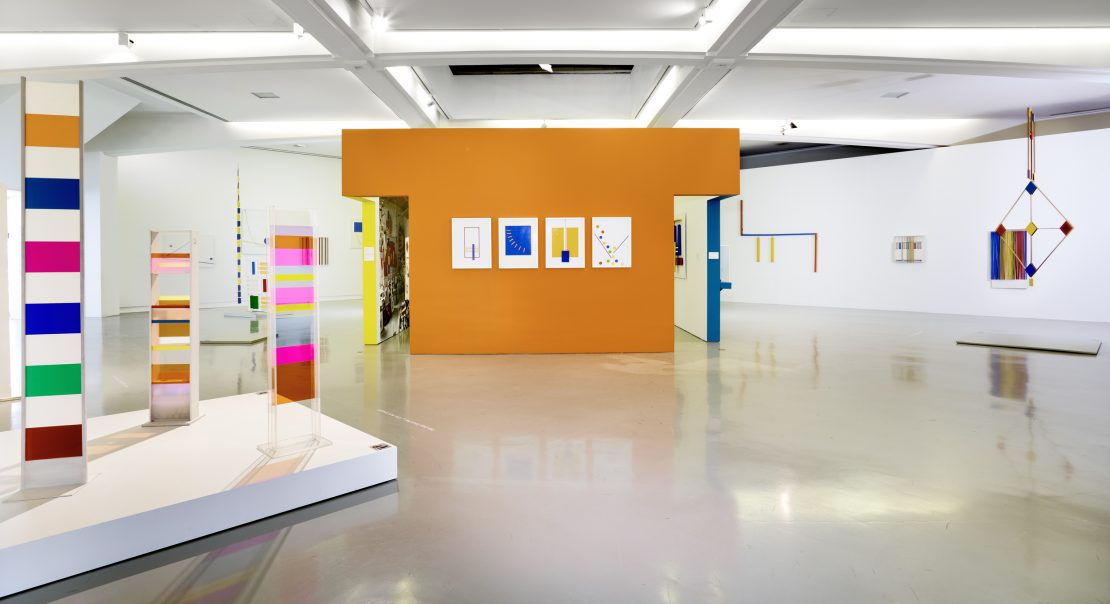
From his very first paintings, wich were almost abstract, he used a paletter of primary colours, applied in blocks.
He then applied this technique to modifiable (transformable) wooden sculptures. The idea behind this sculptures was to enable the viewer to switch elements around.
In a later period, he explored the luminiscent properties of colored Plexiglas.
The donation of around a hundred of the artist’s works to MAMAC in 2004 was the subject of an exhibition. The museum thus becoming a reference center for the work of the artist in France.
Albert Chubac died in Tourette-Levens in 2008.
Collection Guides
2019
2020
2022