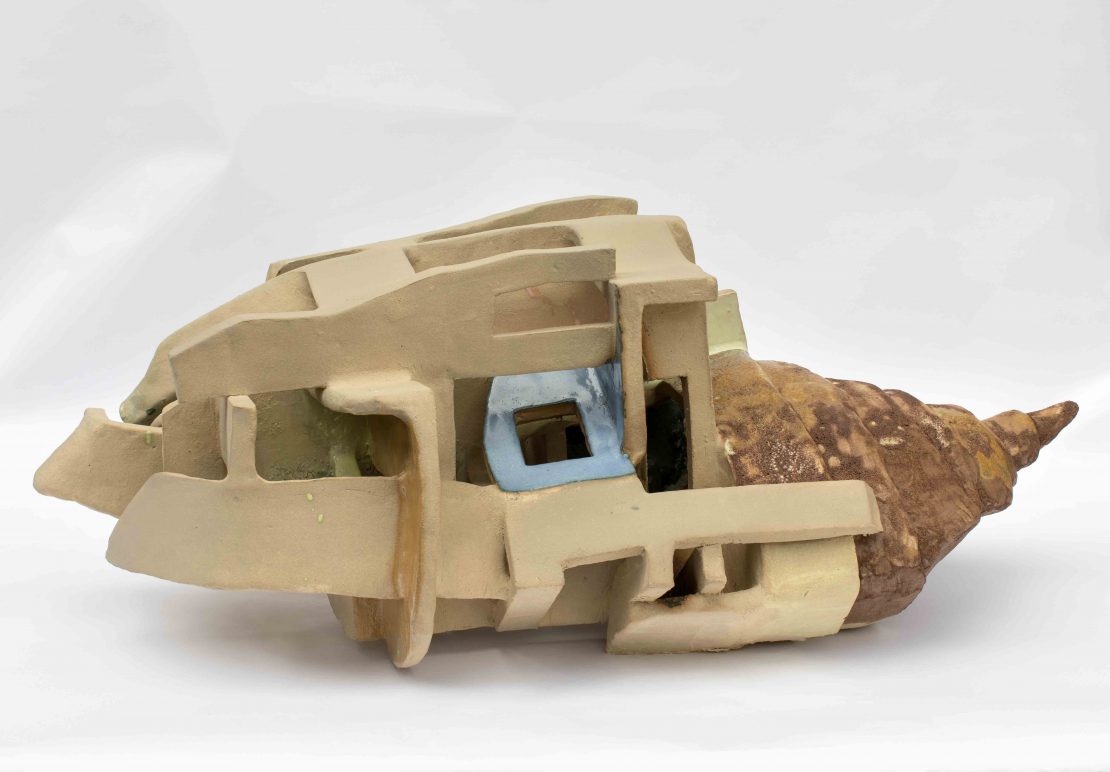
Isa Melsheimer, Metamorphosis (Jacques Couëlle) II, 2021, Aide à la production Mamac, Courtesy Esther Schipper, Berlin, Galerie Jocelyn Wolff, Paris et l'artiste
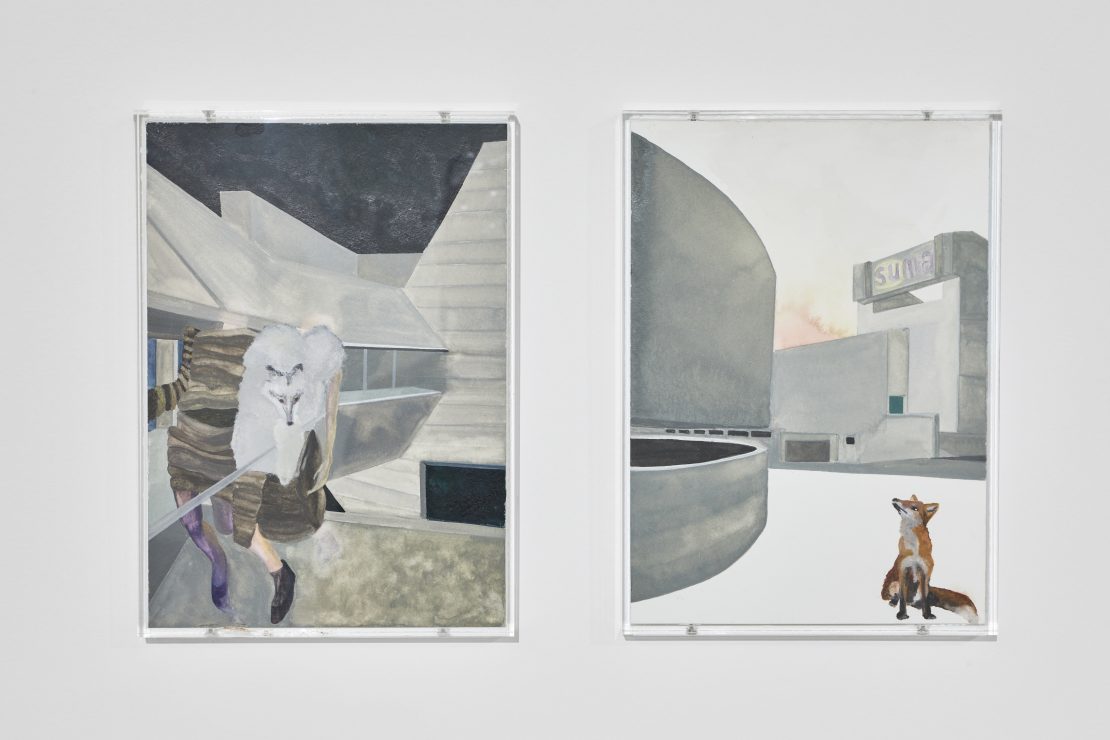
The “renaturalisation” of cities through the appearance of wild animals peacefully roaming the streets and avenues of international metropolises is one of the most striking images of the first lockdown in spring 2020. For years, Isa Melsheimer has referenced this emergence of the animal world within the universe of cities in her gouaches and embroidery.
Here, after having been driven out by urbanisation, the fox returns to the streets of cities.
In this goache, Isa Melsheimer depicts the fox in the midst of this architecture: the building is crude, lacking any architectural flourishes, and no landscape can be seen in the background.
The confrontation of these images of modernity – of these concrete citadels, void of any human presence – evokes a “post-human” world. A fan of science ficiton, the artist suggests through these various scenes both the disappearance of a world and its reconquest by other forms of living things: plants, animals, etc.
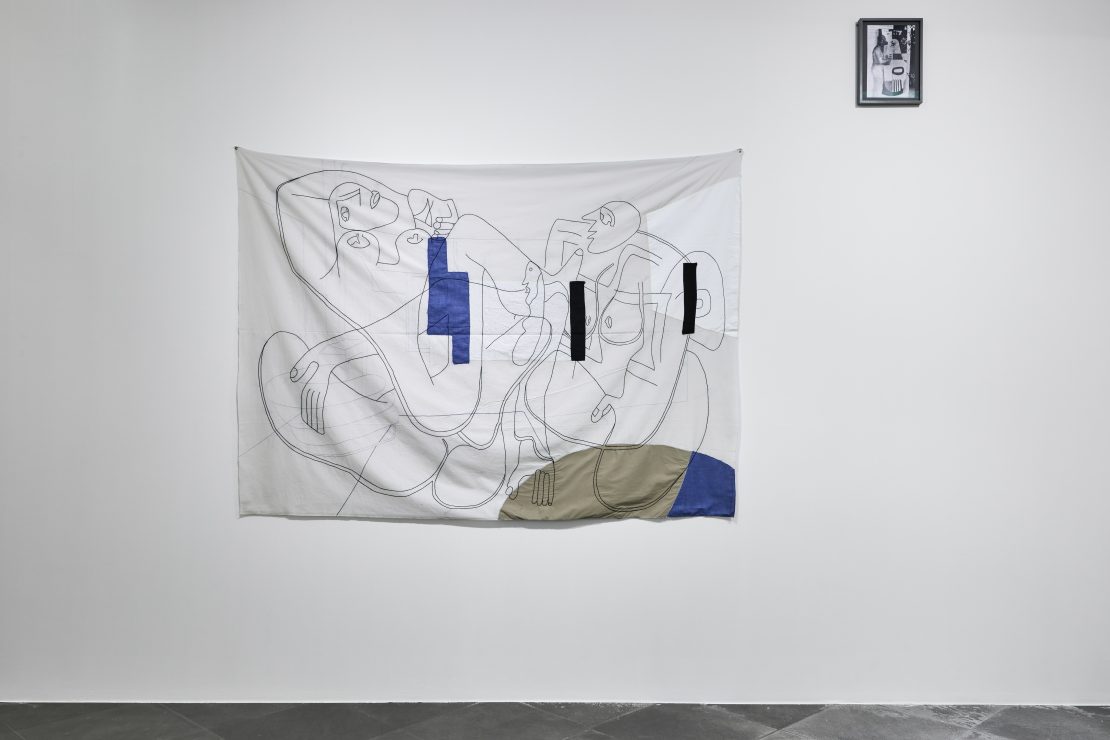
The work presented is a variation on fabric of a fresco painted by Le Corbusier at Villa E-1027, in Roquebrune-Cap-Martin. A true icon of modern architecture, Villa E-1027 was Eileen Gray’s first architectural creation. It serves as a manifesto, both for the architecture itself and for the furniture designed in collaboration with Jean Badovici. There, several years after Eileen Gray’s departure in 1932, Le Corbusier undertook the creation of seven murals. According to biographers, upon discovering them years later in a magazine, Eileen Gray considered this to be an act of vandalism. The story goes that a complex relationship, fuelled by both jealousy and admiration, had been established between the two architects, and that the spurned lover Le Corbusier was said to have declared himself to have: ”a furious desire to dirty the walls“. Isa Melsheimer saw this as a vengeful act by Le Corbusier. Through the use of embroidery and the interplay of textiles, the artist restores fluidity, slowness and nomadism to this gesture, described as impulsive by its author.
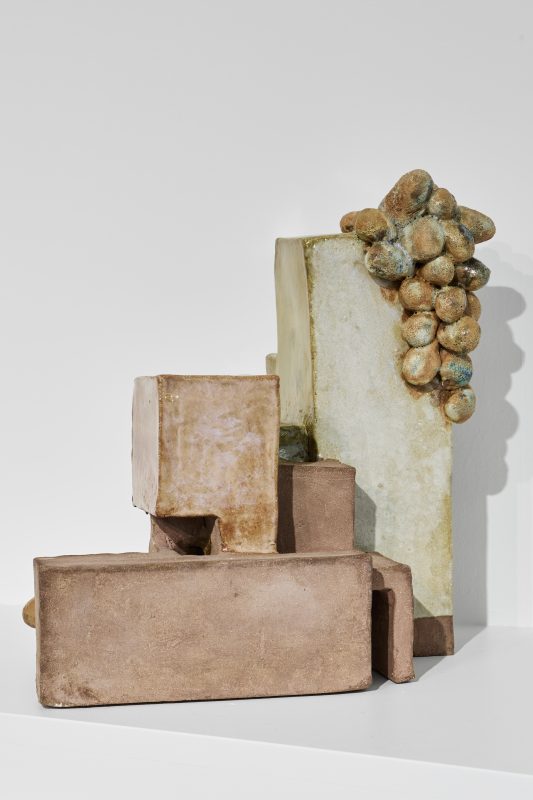
In ceramics, Isa Melsheimer explores the human relationship with nature through the study of architectural form, crossed with living matter.
During her stay in Nice in 2021, Isa Melsheimer immersed herself in the region’s emblematic architecutre. The ceramics presented here are inspired by the overlapping volumes of the Maison Rouge, created by Nice architect Pierre Louis Faloci, in Villefranche-sur-Mer in 1975. Built on a large wooded plot of umbrella pines, the house remains hidden behind abundant vegetative cover as it overlooks a steep cliff facing the sea.
Isa Melsheimer’s ceramic represents the Maison Rouge, shown here invaded by larvae as the artist alludes to red weevils and harmful insects infesting palm trees.
Certain ceramics bring together the daring architectural forms invented several decades ago with more organic forms evoking the cocoon and, as a result, metamorphosis. This shared reinvention of architecture and the insect evokes a transformation of an idealised past, towards a landscape that is still to come, not yet hatched.
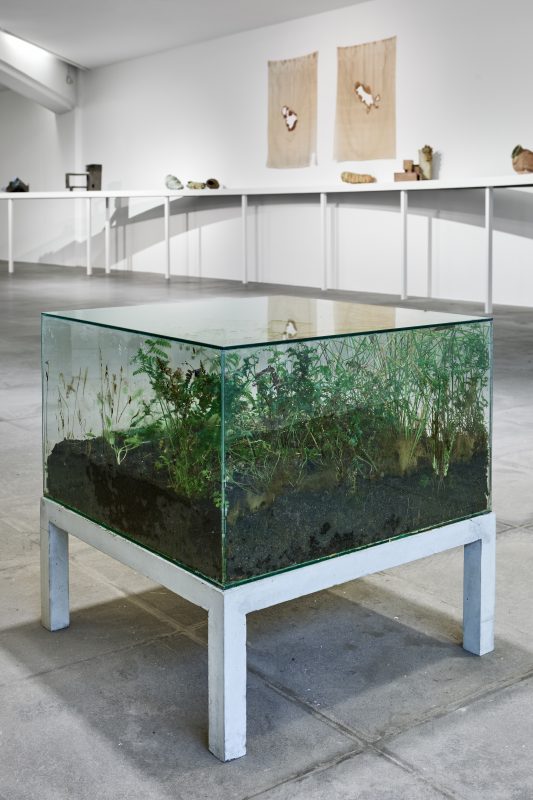
The Wardian Case is the ancestor of modern terrariums and glass aquariums. This portable greenhouse was designed for the long-distance transport of plant species, and was invented by Dr Nathaniel Bagshaw Ward (1791–1868) in London. 19th-century naturalists would use these glazed boxes to bring back exotic plants bound for botanical gardens. As the young shoots harvested could be placed on the decks of ships to benefit from the daylight and constant humidity (ensured by the box’s sealing). These portable ecosystems are recreated by the artist, highlighting the tension between the plant’s vitality and its permanent negotiation with the constraints imposed by human intervention. They also represent a multitude of miniature cosmos. This work was created with seeds collected on the island of Fogo (Canada), where the artist spent three months in residence in 2017.
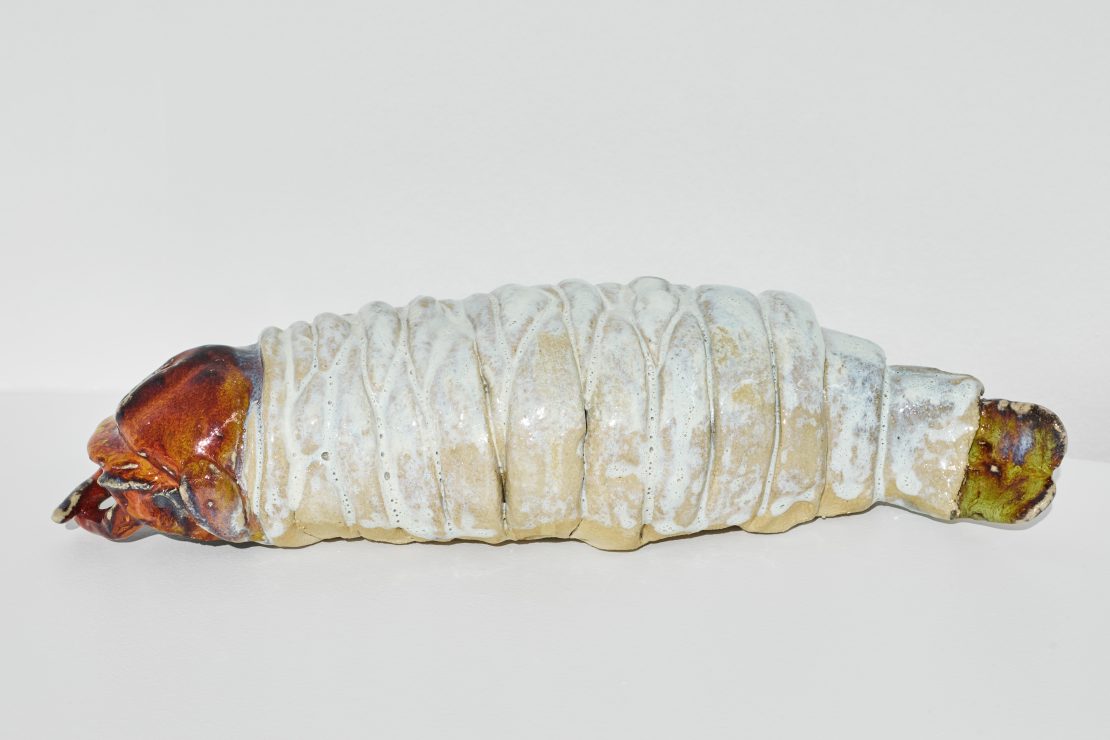
This work is part of a series of glazed ceramics evoking the larvae of red weevils, insects that live in colonies within palm trees and destroy their tissues in order to feed themselves. First found in Asia, this pest reached the Middle East and the Mediterranean basin in the mid-1980s, where it spread rapidly – transforming coastal landscapes, now punctuated by the orphaned trunks of palm trees. Established on the Côte d’Azur during the 19th century, the palm tree – an exotic plant – has now become a symbol of this region, with some 50,000 palm trees identified in the Alpes-Maritimes.
The proliferation and voracity of these insects represents both a threat and the possible metamorphosis of the landscape, and consequently of a certain coastal identity within our collective imagination.
Against the use of biocides, since 2018, the City of Nice has chosen to use a fungus-based biological treatment to fight this invasion, while cities in the United States are now considering replanting endemic trees to bring back a natural landscape in place of a manufactured identity.